
Category: Psychology & Family Wellness | Read Time: 9 min
How Do I Know If My Parent Is a Narcissist?
7 Warning Signs to Watch For

If you've ever walked on eggshells at home, been blamed for things that weren't your fault, or spent years feeling like your emotions simply didn't matter—you're not alone.
Growing up with a narcissistic parent is one of those experiences that's hard to name while you're living it, because it's all you've ever known. But there's a reason so many people are searching for answers.
Narcissistic parenting behaviors are well-documented in clinical psychology, and recognizing the signs is often the first step toward understanding your past—and reclaiming your future.
So what does narcissistic parenting actually look like in real life? Here are 7 of the most common signs to watch for.
Sign #1: They Use Bullying Tactics—Teasing, Criticizing, and Belittling
One of the most recognizable traits of a narcissistic parent is the use of mockery and harsh criticism, often disguised as "just joking" or "I'm only trying to toughen you up." This might look like a parent who constantly makes cutting remarks about your weight, your intelligence, or your ambitions—and then gets frustrated when you react emotionally.
Picture this: you come home excited about a B+ on a really difficult exam. Your parent's response? "Your sister always got A's. What happened?" Or they crack a joke about it in front of relatives and call you "too sensitive" when your feelings are hurt.
This behavior is a power play, plain and simple.
Narcissistic parents need to feel superior, and tearing down a child's confidence—especially publicly—is one way they maintain control. Over time, children internalize these messages and can spend decades battling chronic self-doubt and perfectionism, long after they've left home.
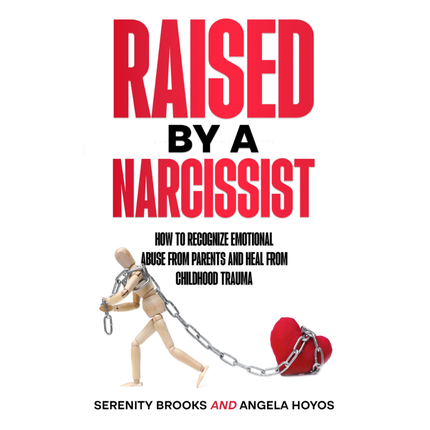
If this sounds painfully familiar, the book Raised by a Narcissist: How to Recognize Emotional Abuse from Parents and Heal from Childhood Trauma is a compassionate, eye-opening read that helps you connect these childhood experiences to the patterns you may still be living out today.
Sign #2: They Are Masters of Manipulation
Narcissistic parents rarely ask for what they want directly. Instead, they manipulate—through guilt, silent treatment, emotional withdrawal, or a cycle of warmth followed by cold punishment. This unpredictability keeps children in a constant state of low-grade anxiety, always scanning the room, always trying to figure out what mood the parent is in and what that means for them.
It sounds like: "I was telling your aunt how excited I was that you'd be at the dinner. I already told everyone you were coming. But go ahead—go to your thing. I'll figure out what to tell them." This kind of emotional leverage makes the child feel personally responsible for the parent's wellbeing—a burden no child should ever have to carry.
The manipulation often continues into adulthood, just in more sophisticated forms. Whether it's guilt-tripping you into skipping your own plans, weaponizing family holidays, or playing the victim when you try to set limits, the dynamic stays remarkably consistent.
Sign #3: They Gaslight You—Constantly
Gaslighting is one of the most psychologically damaging tools in a narcissistic parent's toolkit. It involves denying, distorting, or rewriting reality so that the child gradually begins to doubt their own memory and perception of events.
It sounds like:
"That never happened."
"You're being so dramatic."
"I never said that—you're imagining things."
"Everyone agrees you're overreacting."
"You've always had a problem with exaggerating."
When a child is repeatedly told that their experience of reality is wrong, they lose trust in their own judgment. This is especially damaging because it makes the abuse nearly impossible to identify—or even remember clearly. If you often feel confused, foggy, or unsure of what actually happened after a difficult conversation with your parent, gaslighting may have been a constant presence in your upbringing.
Raised by a Narcissist: How to Recognize Emotional Abuse from Parents and Heal from Childhood Trauma dedicates significant attention to gaslighting—specifically how it operates in parent-child relationships and how to begin trusting yourself again after years of having your reality questioned. It's a validating and genuinely useful resource for anyone who grew up feeling like they couldn't trust their own mind.
Sign #4: They Are Emotionally Rigid—and Won't Let You Have Feelings Either
Healthy parents allow—and even encourage—a full range of emotional expression. Narcissistic parents, by contrast, are emotionally inflexible. There's a very narrow range of acceptable emotions in the household, and that range is defined entirely by what the parent finds comfortable or convenient.
Your sadness makes them uncomfortable, so you're told to stop crying. Your anger threatens their authority, so you're punished for it. Your excitement is inconvenient, so it gets dismissed or ridiculed. But when the narcissistic parent is upset? The whole household stops and reorganizes itself around managing their emotional state.
This teaches children a devastating lesson: your feelings don't matter, but mine do. Kids raised this way frequently become adults who suppress their emotions, feel intense shame for having needs, or struggle to even identify what they're feeling in the first place—a pattern known as emotional invalidation.
A landmark body of research by Dr. Karyl McBride found that children of narcissistic parents specifically reported feeling emotionally "invisible," as if their inner life simply didn't register to the parent as real or important. That invisibility leaves a mark.
Sign #5: They Refuse to Respect Your Boundaries
To a narcissistic parent, a child asserting a boundary feels like a personal attack. Reasonable, healthy requests—"I need some privacy,", or "Please don't share my personal information with other people"—are met with rage, guilt-tripping, or complete dismissal.
For example: you calmly ask your parent not to discuss your personal struggles with relatives. They do it anyway at the next family gathering. When you bring it up, their response is: "I'm your parent. I can say whatever I want. You don't get to tell me what to do."
This dynamic often follows children into adulthood. Adult children of narcissistic parents frequently report that their parent continues to read their messages, show up uninvited, share private details with others, or insist on having a vote in major life decisions—who they date, where they live, what career they choose. The underlying message never changes: you don't have the right to be a separate person.
In narcissistic family systems, children exist as extensions of the parent, not as independent human beings with their own inner world. Understanding why this happens—and learning that it was never your fault—is one of the most freeing things you can do. Raised by a Narcissist: How to Recognize Emotional Abuse from Parents and Heal from Childhood Trauma walks you through exactly that process, helping you understand the family system you grew up in and how to start building a healthier relationship with your own needs and limits.
Sign #6: Nothing Is Ever Their Fault—The Blame Always Lands on You
Narcissistic parents have a remarkable ability to avoid accountability. When something goes wrong—a family blowup, a ruined holiday, a child's struggles at school—the narcissistic parent will find a way to redirect the blame. Usually onto you.
Here's how it often plays out: your parent loses their temper and says something genuinely hurtful. Later, instead of apologizing, they say: "Well, if you hadn't pushed my buttons, none of that would have happened. This is your fault."
This is called blame-shifting, and it's directly connected to the narcissistic inability to tolerate shame. Admitting a mistake would mean cracking the idealized self-image they've spent years constructing, so the blame gets outsourced—to a spouse, to the children, to bad timing, to anything but themselves. And the cycle repeats.
Children raised in this environment often grow into adults with a deep, exhausting sense that everything is their fault—even situations that were entirely outside their control. Therapy, along with resources like Raised by a Narcissist: How to Recognize Emotional Abuse from Parents and Heal from Childhood Trauma, can help you begin to separate what was genuinely yours from what was never yours to carry in the first place.
Sign #7: They Make Everything About Themselves
Whether it's your graduation, your promotion, your health scare, or your wedding day—somehow it loops back to them. Narcissistic parents have an almost compulsive need to be the center of every story, and to reframe your experiences around their feelings, their history, or their needs.
You share exciting news and they respond: "You know, if it weren't for everything I gave up for you, none of this would have been possible." Or they pivot: "That reminds me of a time when I had a big moment and nobody even showed up for me..."
This pattern—known as narcissistic supply-seeking—means your milestones are only valuable to the parent if they reflect well on them, or give them an opportunity to insert themselves into the spotlight. Your authentic experience, once again, becomes background noise.
Over time, children stop sharing their wins, their struggles, and their inner life with the parent entirely. It's simply not worth the effort of having it redirected.
So What Do You Do With All of This?
Recognizing these signs doesn't mean you have to burn anything down. But it does mean you can stop carrying blame that was never yours, start honoring your own needs, and begin to understand the dynamics that quietly shaped so much of who you are.
That awareness alone can be life-changing.
If you're looking for a place to start, Raised by a Narcissist: How to Recognize Emotional Abuse from Parents and Heal from Childhood Trauma is one of the most thorough and compassionate guides available on this subject.
It helps you identify the specific behaviors that cross the line into emotional abuse, understand how those early experiences are still showing up in your adult life, and—most importantly—gives you a real, honest path toward healing.
Whether you're just beginning to connect the dots or you've been on this road for a while, it's the kind of book that makes you feel like someone finally gets it.
You deserved better then. You still do.